Key takeaways
- Wear the belt every trip, in every seat. An unrestrained occupant is the most dangerous thing in a crash, pregnant or not.
- Lap belt under the belly, across the hips and pelvic bones. Shoulder belt across the chest and to the side of the belly, never under an arm.
- Seat back as far as is comfortable, wheel tilted toward the chest, airbags on.
- A belt loads the shoulder and hip it crosses. After any crash, OB first, then a documented exam.
Somewhere in the second trimester, most people have a moment with the seat belt. The lap belt rides up, the shoulder belt crosses the belly, and a question forms that nobody wants to say out loud: is this thing going to hurt the baby if we stop hard? The question is reasonable. The answer, from the National Highway Traffic Safety Administration, is that the belt stays on, and that the important part is where it goes.
The short answer is yes
Wear the belt, every trip, in every seat. NHTSA's guidance for pregnant drivers and passengers is unambiguous on the point (nhtsa.gov): a properly worn belt protects both the mother and the baby, and the most dangerous thing a pregnant occupant can do in a crash is be unrestrained. The belt's job is to keep you in the seat and away from the wheel, the dash, and the windshield. Nothing about pregnancy changes that job. Pregnancy only changes where the belt sits.
The lap belt goes low
Under the belly, not over it. The lap portion should lie across the hips and the pelvic bones, as low as it will sit, snug against the top of the thighs. The pelvis is built to take that load. The belly is not. If the lap belt is riding up over the bump, pull it down and tighten it; if it will not stay, check that the seat is not reclined so far that the belt has nothing to anchor against.
The shoulder belt goes across the chest
Between the breasts and off to the side of the belly, over the collarbone, never under an arm and never behind the back. Tucking the shoulder belt under an arm is the common mistake, made because the strap is annoying across the chest late in pregnancy, and it is the one that hurts worst in a crash, because it leaves the upper body free to fold forward and puts the full load on the lower ribs. Adjust the belt's height at the pillar if your car allows it so the strap crosses the collarbone rather than the neck.
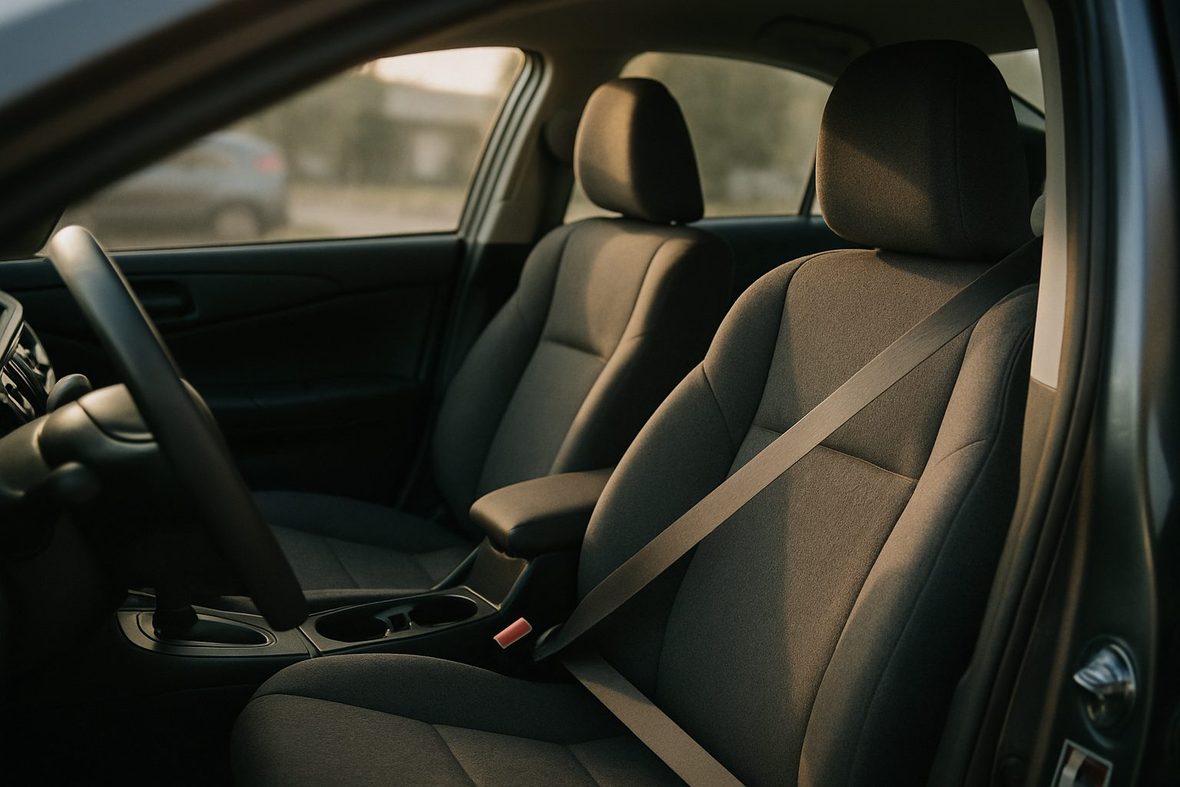
The seat and the wheel
Move the seat back as far as you can while still reaching the pedals comfortably, and if the wheel tilts, aim it toward your chest rather than your belly. NHTSA's advice is to keep as much distance as practical between the breastbone and the wheel. Airbags stay on; they are designed to work with a belt, not instead of it, and the distance is what makes the pairing safe. Late in pregnancy, if reaching the pedals means sitting close to the wheel, it is worth being the passenger more often.
Passengers and the back seat
The same rules apply in every seat: lap belt low, shoulder belt across the chest. If the back seat offers a lap-only belt, a seat with a three-point belt is the better choice. Riding in the back does not change the need for the belt, and neither does a short trip; most of the metro's low-speed crashes happen on ordinary arterials a few minutes from home.
After any crash, even belted
A belt worn correctly does its job, and its job involves loading the shoulder, the collarbone, and the hip it crosses. That load is where much of the soreness after a crash lives, and during pregnancy the hip and low back are already carrying more than usual. So the sequence on this desk applies to a belted crash exactly as it applies to any other: your obstetric provider first, in every case, then a documented exam of the back and neck once they have cleared you. The urgent page has the order. The 72 hours page explains why the soreness lands on day two.
Tell the clinic where the belt was and whether the airbag deployed. It is part of the history, and it helps a clinician understand what was loaded and where. Missouri Injury Clinic's offices and phones: O'Fallon (636) 280-0990, Hazelwood (314) 627-1411, South County (314) 530-5480. Closed 12 to 2 daily.
The emergency line
Belted, cleared by your OB, and still sore? That is what the exam is for.
A documented exam this week protects your health and your options. Say pregnant when you call.